
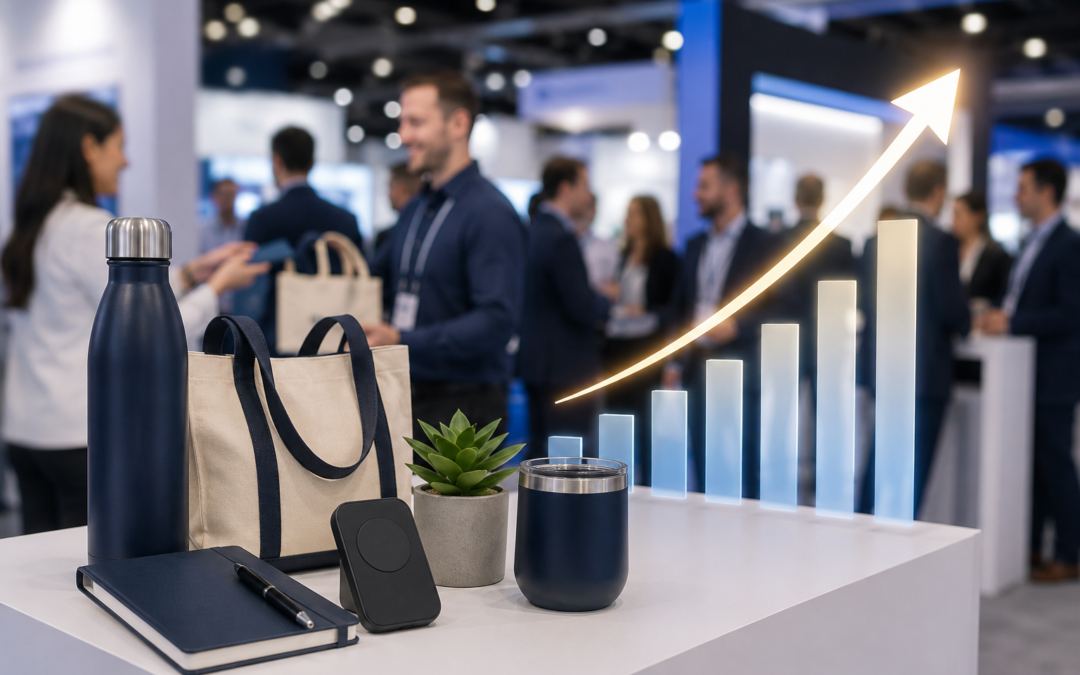
Trade show promotional items remain one of the most effective tools in event marketing when used strategically. The right giveaway can increase booth traffic, improve lead quality, reinforce your brand message, and continue generating visibility long after a trade show ends. The wrong promotional item, however, can waste budget, attract unqualified attendees, and deliver little measurable return.
For companies investing in trade show marketing, promotional products should never be viewed as random freebies. Successful exhibitors understand that trade show giveaways are marketing tools designed to support larger campaign goals including lead generation, brand recognition, appointment setting, product demonstrations, and customer engagement. I always encourage my clients to incorporate a pay-to-play strategy. In other words, attendees must give you something in exchange for the giveaway.
At TPG Trade Show + Event Marketing, we work with exhibitors across industries to develop integrated trade show marketing campaigns that combine exhibit design, attendee engagement, and strategic promotional product selection to maximize event ROI.
Why Trade Show Promotional Items Still Matter
Despite the rise of digital marketing and virtual engagement tools, promotional products continue to perform exceptionally well in face-to-face marketing environments. Trade shows are highly competitive, and exhibitors are constantly fighting for attendee attention. A carefully selected giveaway can help create a memorable interaction while encouraging attendees to spend more time engaging with booth staff.
The most effective trade show promotional items do far more than simply attract traffic. They create positive brand associations and reinforce the exhibitor’s positioning long after the event is over. A useful or premium product sitting on a prospect’s desk for months provides ongoing impressions that continue delivering value well beyond the trade show floor.
However, effectiveness depends heavily on strategy. Handing out inexpensive giveaways indiscriminately may create traffic, but not necessarily qualified opportunities. On the flip side, handing out high-value items without getting information and data in return can be a waste of resources. High-performing exhibitors instead align promotional products with specific marketing objectives and attendee engagement activities.
Understanding Cost Per Piece vs. Cost Per Lead
One of the most common mistakes exhibitors make is evaluating promotional products only by cost per piece.
Cost per piece is simply the total cost of the item divided by the quantity purchased. At first glance, exhibitors often assume cheaper items are better because they allow for larger quantities. But low cost does not necessarily equal high value.
While unit pricing matters, the more important metric is cost per lead.
Cost Per Lead = Total Promotional Cost ÷ Qualified Leads Generated
For example, an exhibitor may purchase 5,000 inexpensive stress balls for $1 each, spending a total of $5,000. If those giveaways generate only 100 qualified leads, the promotional cost equals $50 per lead.
Meanwhile, another exhibitor might spend $4,500 on 300 premium wireless chargers ($15 per piece) distributed only to attendees who complete demonstrations or schedule meetings. If that campaign generates 100 qualified leads, the cost per lead falls to $45.
But, in this case, let’s assume that the strategy for the wireless chargers is tailored to attracting higher quality attendees, and therefore captures 150 qualified leads. That brings the cost per lead down to $30 – a stark difference from the $50 cost per lead with the stress balls. Though the wireless chargers cost significantly more per piece, they produced far greater marketing value than the stress balls.
This distinction is critical because the ultimate goal of trade show giveaways is not simply volume distribution. The real objective is generating meaningful engagement and qualified sales opportunities.
Companies that focus exclusively on cheap promotional products often overlook the long-term value generated by stronger engagement, higher-quality conversations, and better post-show conversion potential.
To take it one step further, your brand may also be concerned with the environmental impact of promotional items. If so, selecting a product that will not immediately make its way into a landfill will help reduce the carbon footprint while making a longer lasting impression on attendees.
What Makes a Promotional Product Effective?
The best trade show promotional products tend to share several important characteristics. They are useful, relevant to the exhibitor’s audience, and valuable enough that recipients continue using them after the show.
Utility is one of the most important factors. Products that become part of an attendee’s daily routine naturally create repeated brand impressions. Items such as portable chargers, notebooks, reusable drinkware, laptop accessories, and travel products continue to perform well because they provide ongoing practical value.
Brand relevance also plays a major role in effectiveness. Promotional items should feel connected to the exhibitor’s company, industry, or campaign message. A cybersecurity company distributing webcam covers feels intentional and memorable. A construction brand offering durable utility tools reinforces its identity far more effectively than generic novelty items.
The most effective giveaways are often not literal representations of the brand itself. Instead, they reinforce the campaign theme, the emotional takeaway, or the solution that the brand provides. That distinction is important because attendees may remember experiences and emotions far longer than they remember logos – especially if your brand is not as recognizable as others in your space.
Perceived value is equally important. Attendees naturally place greater importance on products that feel premium or difficult to obtain. In many cases, one thoughtful executive gift distributed strategically can outperform thousands of low-cost giveaways.
Longevity matters as well. Disposable promotional items may generate temporary traffic, but long-lasting products continue promoting a company long after the trade show concludes. Every time an attendee uses a branded product, the exhibitor receives another brand impression.
A Real-Life Example:
Red Bull is one of the best examples of campaign-aligned promotional strategy. They must perform in both B2B and B2C spaces, and their giveaways are not always about the beverage and flavors. Instead, they support the emotional identity of their campaign: energy, adrenaline, performance, and experience. At experiential events and sponsorship activations, giveaways often include fitness gear, cooling towels, performance accessories, hydration products, or VIP access experiences.
The promotional item reflects the aspirational lifestyle message rather than the physical product. This reinforces emotional branding by connecting with the audience identity and extends the campaign experience far beyond the event.
Popular Types of Trade Show Promotional Products
The promotional products industry offers thousands of possibilities, but most trade show giveaways fall into several primary categories.
Everyday Utility Items
Utility products remain among the most commonly used trade show promotional items because they combine affordability with practicality. Pens, tote bags, notebooks, lanyards, reusable water bottles, desk accessories, and tools continue to provide dependable visibility.
While these products are effective for broader distribution, quality and creativity are important. Generic giveaways that look identical to every competitor’s promotional item often fail to create lasting impact.

Technology Giveaways
Technology products continue to grow in popularity because they combine utility with strong perceived value. Wireless chargers, power banks, USB hubs, webcam covers, smart trackers, and phone stands consistently perform well because attendees use them regularly.
Technology giveaways are particularly effective when tied to lead qualification activities, product demonstrations, or scheduled meetings.
Branded Apparel
Apparel remains one of the strongest long-term branding opportunities in trade show marketing. T-shirts, hoodies, hats, quarter-zips, and performance apparel can dramatically extend brand exposure when attendees continue wearing them after the event.
The most successful branded apparel focuses on attractive design first and promotion second. Apparel that feels stylish and wearable naturally generates more visibility. Remember, to be effective, that t-shirt needs to stay in a drawer and worn on occasion, not donated to a nonprofit, or worse yet, sent to a landfill. That means that it needs to be attractive and of good enough quality to want to be worn by the attendee audience, which in many cases may be high-level executives.

Food and Beverage Promotions
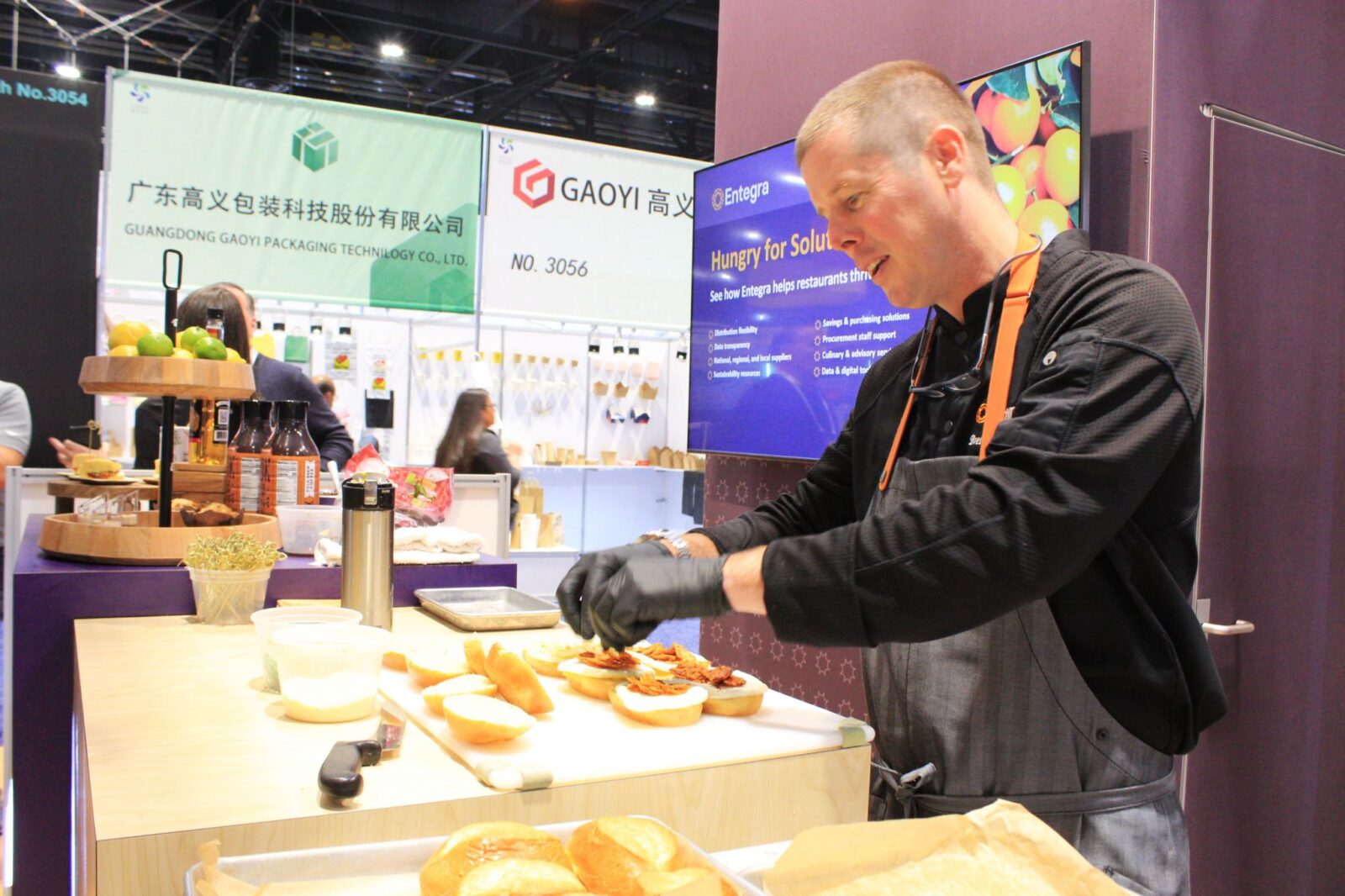
Food and beverage experiences are excellent for driving booth traffic and increasing attendee dwell time. Coffee bars, snack stations, branded beverages, candy, and hospitality activations encourage attendees to pause, engage, and spend more time interacting with booth staff.
While these promotions offer shorter-term visibility than physical products, they can offer an opportunity for strong engagement during the event.
Premium Executive Gifts
Higher-end promotional products are often reserved for qualified prospects, VIP customers, or pre-scheduled meetings. Premium backpacks, luxury drinkware, travel accessories, wireless earbuds, and executive technology products can create stronger emotional impact while elevating brand perception.
These items are most effective when distributed strategically rather than casually.
Novelty Items
Novelty products like toys, quirky or humorous on-brand gifts, and collectibles can capture attention and create excitement for the right audience and campaign. These types of giveaways work well for brands with a mascot or that tie-in directly to a specific campaign or experience. They often can surprise and delight attendees, especially when tied to booth interactions.
For a product launch, we worked with Ford Motor Company to give away die-cast tow trucks at a series of tow shows around the United States. Wells Fargo has traditionally given away stagecoach toys. Travelers Insurance has given away red umbrellas, and AFLAC has given away stuffed ducks. T-Mobile often gives away magenta LED wearable or bright pink branded socks.
These products create fandom, collectability, and exclusivity, and they often create must-have buzz on the trade show floor.
How to Use Promotional Products Strategically at Trade Shows
The most successful exhibitors do not simply place giveaways on a table and hope attendees stop by. Instead, they build promotional products into a larger engagement strategy.
One highly effective approach is tiered distribution. Lower-cost promotional items may be available to general booth visitors, while higher-value products are reserved for attendees who participate in demonstrations, complete surveys, schedule appointments, or qualify as serious prospects. This approach helps exhibitors control budget while encouraging deeper engagement.
Interactive experiences also increase promotional effectiveness significantly. Product demonstrations, QR code activations, social media contests, prize drawings, and gamification experiences help create memorable interactions around the giveaway itself.
Pre-show marketing can further improve performance. Many exhibitors now use promotional products as part of appointment-setting campaigns before the event begins. Exclusive giveaways, VIP mailers, and limited-edition products can help drive pre-booked meetings and increase anticipation leading into the show.
Scarcity also plays an important psychological role. Limited-quantity giveaways or appointment-only gifts naturally create urgency while increasing perceived value.
Common Trade Show Giveaway Mistakes
Even experienced exhibitors can reduce the effectiveness of their promotional campaigns through poor planning. One of the most common mistakes is distributing premium giveaways too freely. When exhibitors hand out high-value products indiscriminately, they often attract attendees interested only in collecting free merchandise rather than engaging in meaningful business discussions.
Another common issue is selecting products based purely on low price. Cheap items that break quickly or feel disposable can unintentionally reflect poorly on the exhibitor’s brand.
Shipping and logistics are also frequently overlooked. Large or bulky promotional products can increase freight costs, material handling, storage requirements, and booth setup complexity.
Branding itself is another important consideration. Overly aggressive logos or poor-quality printing can discourage attendees from actually using the product. The best promotional items balance visibility with attractive, professional design.
Measuring Promotional Product ROI
Like any other trade show marketing investment, promotional products should be measured against campaign goals. Important performance metrics may include:
- Booth traffic generated
- Qualified leads collected
- Product demonstrations completed
- Meetings scheduled
- Cost per lead
- Social engagement
- Post-show conversion rates
- Pipeline contribution
Exhibitors that consistently analyze promotional performance data are far more likely to improve future campaigns and maximize trade show ROI over time.
Final Thoughts on Trade Show Promotional Items
Trade show promotional products remain one of the most powerful tools in event marketing when selected carefully and integrated strategically into a larger campaign.
The right trade show giveaway can increase booth engagement, improve lead quality, reinforce brand positioning, and continue generating impressions long after the exhibit hall closes. The key is focusing less on cheap volume distribution and more on meaningful engagement, campaign alignment, and measurable business outcomes.
At TPG Trade Show + Event Marketing, we help companies develop complete trade show marketing strategies that combine custom exhibits, attendee engagement, promotional campaigns, and experiential activations to maximize event performance.

Christina Piedlow, TPG CEO
If you are planning an upcoming trade show and want to improve attendee engagement, booth traffic, and lead generation, our team can help you create a promotional strategy tailored specifically to your audience and goals. Start here!