
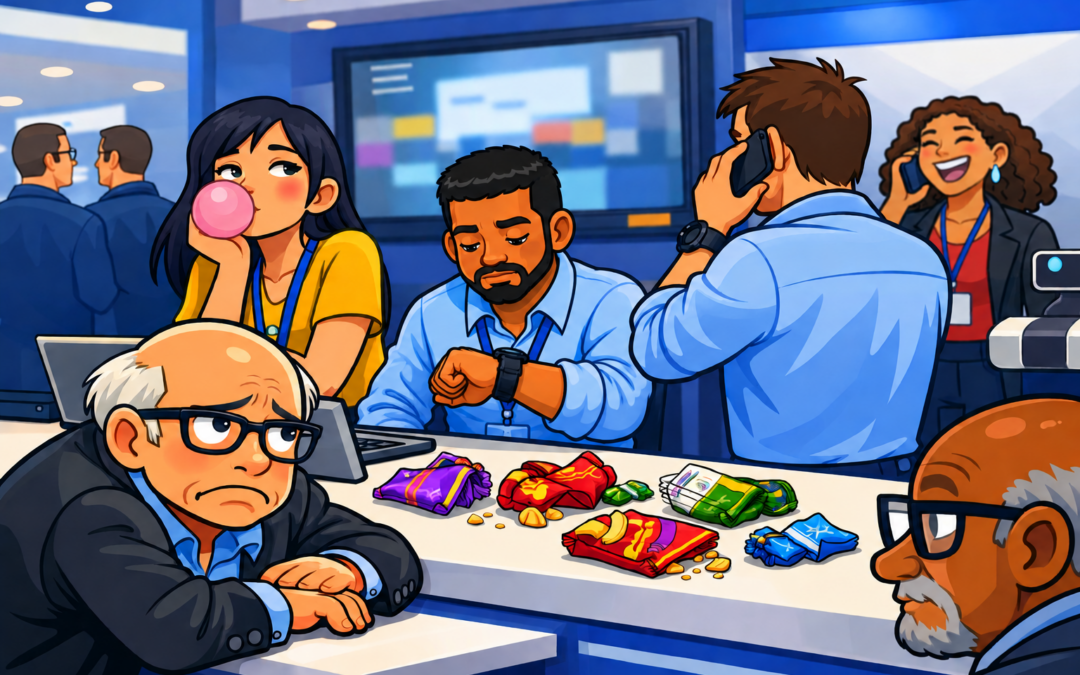
Most exhibitors don’t struggle because of their booth. They struggle because of how their booth is staffed.
It’s natural to focus your time and budget on the physical elements in your booth you can directly control. But once the show opens, there’s another layer that ultimately determines whether that investment pays off: how your team shows up and engages.
I’ve watched awesome booths underperform simply because the team wasn’t prepared or aligned on what success actually looked like.
The Difference Between Being There and Being Effective
A lot of companies handle booth staffing like it’s just a calendar exercise. They look at availability, product knowledge, and who wants to do it. All reasonable considerations, but none of that necessarily leads to strong performance on the show floor.
Being knowledgeable about product doesn’t automatically mean someone knows how to engage a passing attendee, start a conversation without feeling intrusive, or guide that interaction toward something meaningful. Without that direction, even strong team members can default into passive behavior, such as standing back, waiting to be approached, or having conversations that never really go anywhere. Or showing behaviors that make them unapproachable like being on their phones, chatting with each other, or standing with their backs to the aisles.
Meanwhile, attendees are constantly making quick decisions as they move through the aisle. If your team isn’t actively creating opportunities for engagement, those moments pass quickly. Then they’re gone.
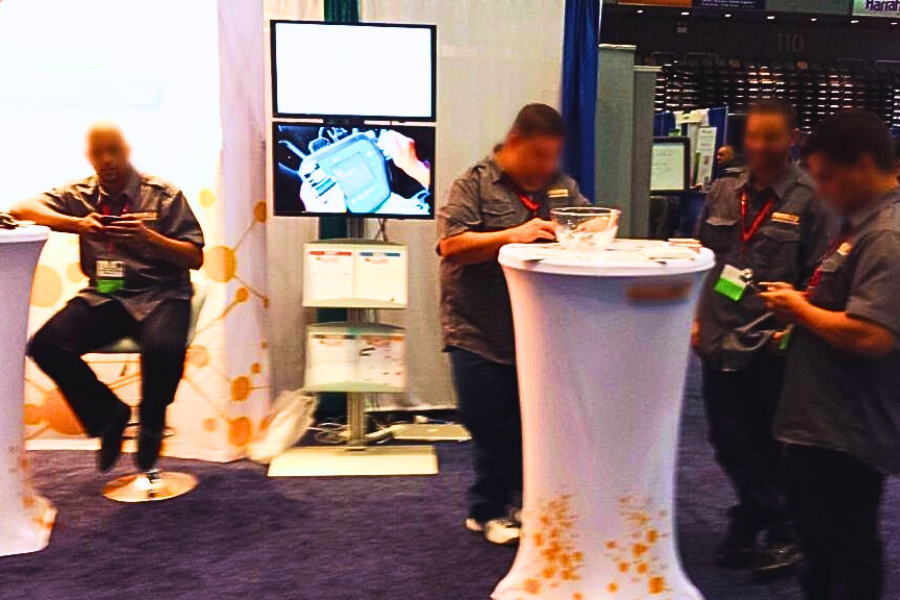
Staffers behaving badly.
Where Brand Ambassadors Fit and Why They Work
We’ve talked a lot about brand ambassadors over the years because, when used correctly, they have a significant impact on booth performance. It’s not uncommon to see engagement levels increase dramatically, with qualified lead volume doubling or even tripling. That doesn’t happen because they know the product better than your internal team, It happens because they are trained specifically to engage, qualify, and keep conversations moving.
That said, not every organization is comfortable going that route. Some teams don’t like the idea of an outside representative speaking on behalf of their brand. Others don’t feel it’s the right investment for their program, or they simply prefer to keep everything in-house.
And that’s fair. But it also highlights something important: the value isn’t just in having brand ambassadors – it’s in the skillset they bring to the environment.
When your team isn’t using those same engagement skills, you can often feel the drop in performance right away, which is exactly why booth staff training matters so much.
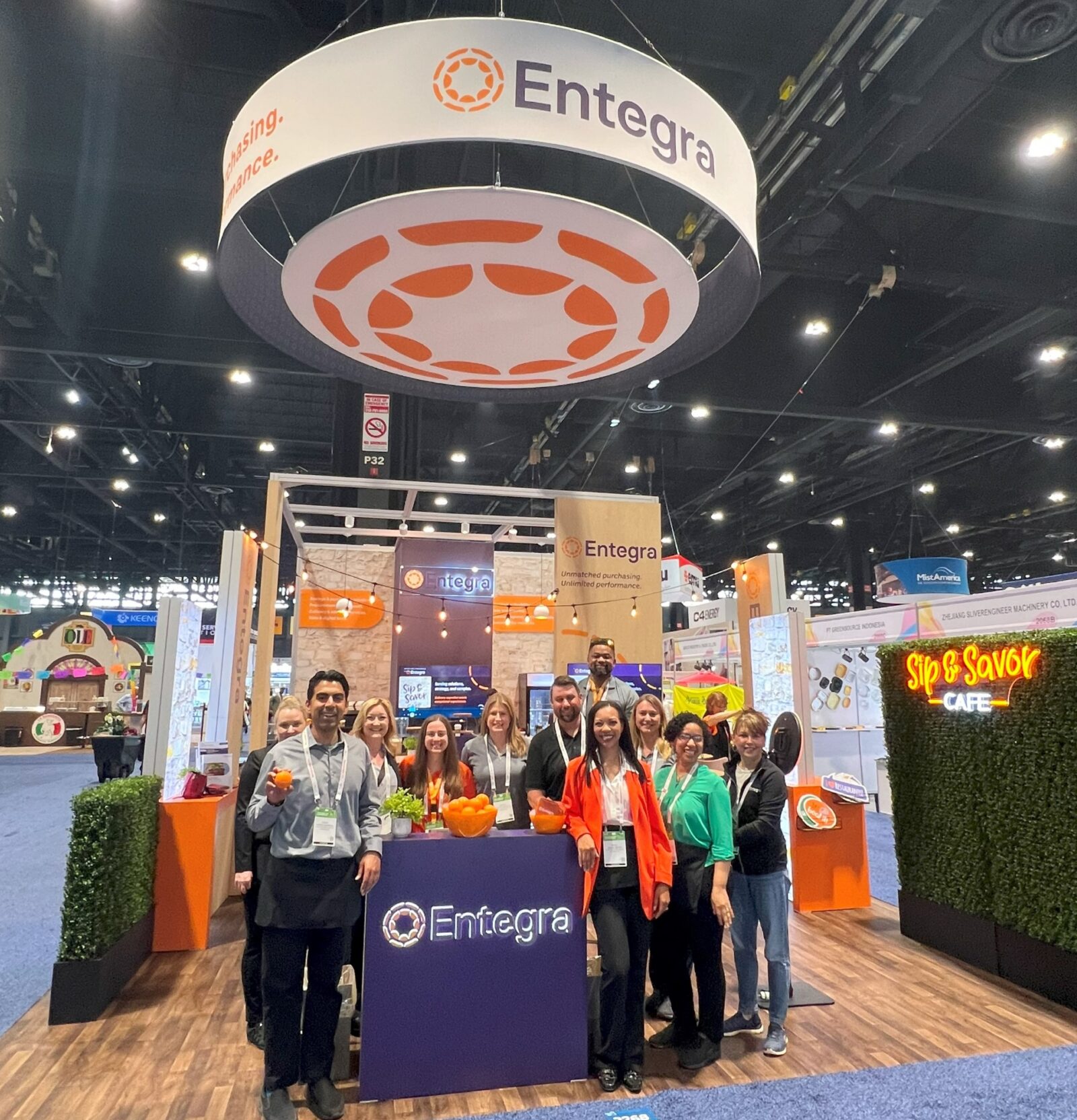
Trained booth staff and TPG Brand Ambassadors bring the magic at NRA 2025.
What Training Actually Does
If you’re not leveraging brand ambassadors, then your internal team needs to operate with a similar level of intention and consistency, and that doesn’t happen by default.
When booth staff are trained properly, the shift in their purpose is noticeable, not just in activity, but in consistency. Everyone understands what they’re trying to accomplish and how to get there. Conversations start sooner and are more natural and intentional. There’s less hesitation, and more structure behind how interactions unfold.
When teams are set up for success, they’re usually grounded in a few key things:
- A clear definition of what a qualified interaction looks like, not just a general goal of “getting leads”
- Practical, natural ways to start conversations in a busy show environment
- A consistent way to communicate your story so it’s relevant to the person in front of them
- An understanding of how to use demos, screens, or activations as tools to support the conversation, not replace it
- A disciplined way of capturing lead data so that it’s actionable after the show
Without that foundation, each staffer ends up operating on instinct. Some will do well, others won’t, and the experience becomes inconsistent and noticeable to attendees.
A Common Scenario
At one show, I walked the floor with a client at the end of the first day. They were frustrated because traffic had been steady, but the results didn’t reflect it. From their perspective, the booth should have been performing better.
We stood back and watched for a few minutes, and the issue became pretty clear. Some of the team members were engaged with each other instead of attendees. Others waited until someone fully entered the booth before acknowledging them, which meant most people never got that far. There wasn’t a shared understanding of how to work the space or how to initiate engagement.
Nothing about the booth itself needed to change. What needed to change was how the team was operating within it.
And this is not the exception, it’s generally the rule. It is rare that I am approached by a booth staffer and asked to come into a booth. Many times, I’ll walk by a booth without anyone stopping me, even if I make eye contact with a staff member or look like I’m genuinely interested in the booth. If there is engagement, it’s typically a forced smile and sometimes a hello. This isn’t good enough and will never move the needle.
Here’s the reality. Your team wants to do well. They don’t want to waste their time at a trade show where they don’t have meaningful discussions or connect with potential customers. And on the flip side, attendees want your team to do well too. They are specifically there to learn and find new solutions. I will often enter a booth and ask a staff member to walk me through their display and tell me about their solutions. Staffers are generally excited to talk and show me what’s new, but most attendees won’t make the first move.
So, how do you get your team to feel comfortable enough to start those conversations? The answer is outside training support.
Why Outside Training Makes a Difference
When training is handled internally, it often becomes informal or inconsistent. It can be difficult for team members to coach peers, and even more difficult to give direct feedback on behaviors that may not be effective on the show floor.
Bringing in an outside perspective usually shifts the whole dynamic. There’s a level of objectivity and clarity that’s hard to replicate internally. Expectations are set more clearly, feedback is more direct, and teams are more receptive because it’s coming from someone who specializes in that environment.
Trade shows are a unique selling environment. The pace is different, the interactions are shorter, and the competition for attention is constant. Training for that environment requires a different approach than what most teams are used to in their day-to-day roles.

TPG training session with our client, Bayer.
The Booth Is Only Part of the Equation
It’s tempting to judge a trade show program by the things you can see: the structure, the graphics, the footprint. But those are only part of the picture. The people inside the booth are what bring all of it to life. If they’re not prepared to engage, guide, and qualify conversations, even the best-designed environment will underperform.
When exhibitors take the time to invest in staff training, they’re not just improving individual performance. They’re creating a more cohesive experience for attendees and a clearer path from interaction to outcome.
And in most cases, that’s where the real return on the event is determined.

TPG CEO, Christina Piedlow
If you’re investing in your trade show program and feel like there’s a gap between effort and results, it’s worth taking a closer look at how your team is being prepared.
At TPG, we help clients think through both sides of the equation. For instance, how the booth is designed and how it’s staffed, so the experience actually works the way it’s intended. Whether that includes brand ambassadors, staff training, or a combination of both, the goal is the same: making sure your investment performs the way it should. Let’s talk about how we can help!