

When you’ve been someone’s trade show partner for nearly a decade, you stop thinking in terms of projects and start thinking in terms of a relationship. That’s the story behind TPG Trade Show + Event Marketing’s latest honor: a 2026 Sustainability Award from Honda, presented at the automaker’s annual Indirect Procurement Supplier Conference in Dublin, Ohio.
It’s a big deal, and not just because Honda doesn’t hand these out lightly.
The award, in context
Honda’s Indirect Procurement Division works with more than 5,600 suppliers across North America, and in 2025 alone the company spent over $7 billion on the equipment, products, and services that keep its operations running. Out of that massive supplier base, only 37 companies walked away with an award this year. TPG was one of six recognized specifically for Sustainability – a category Honda reserves for partners who exemplify excellence across environmental, social, ethical, and governance dimensions.
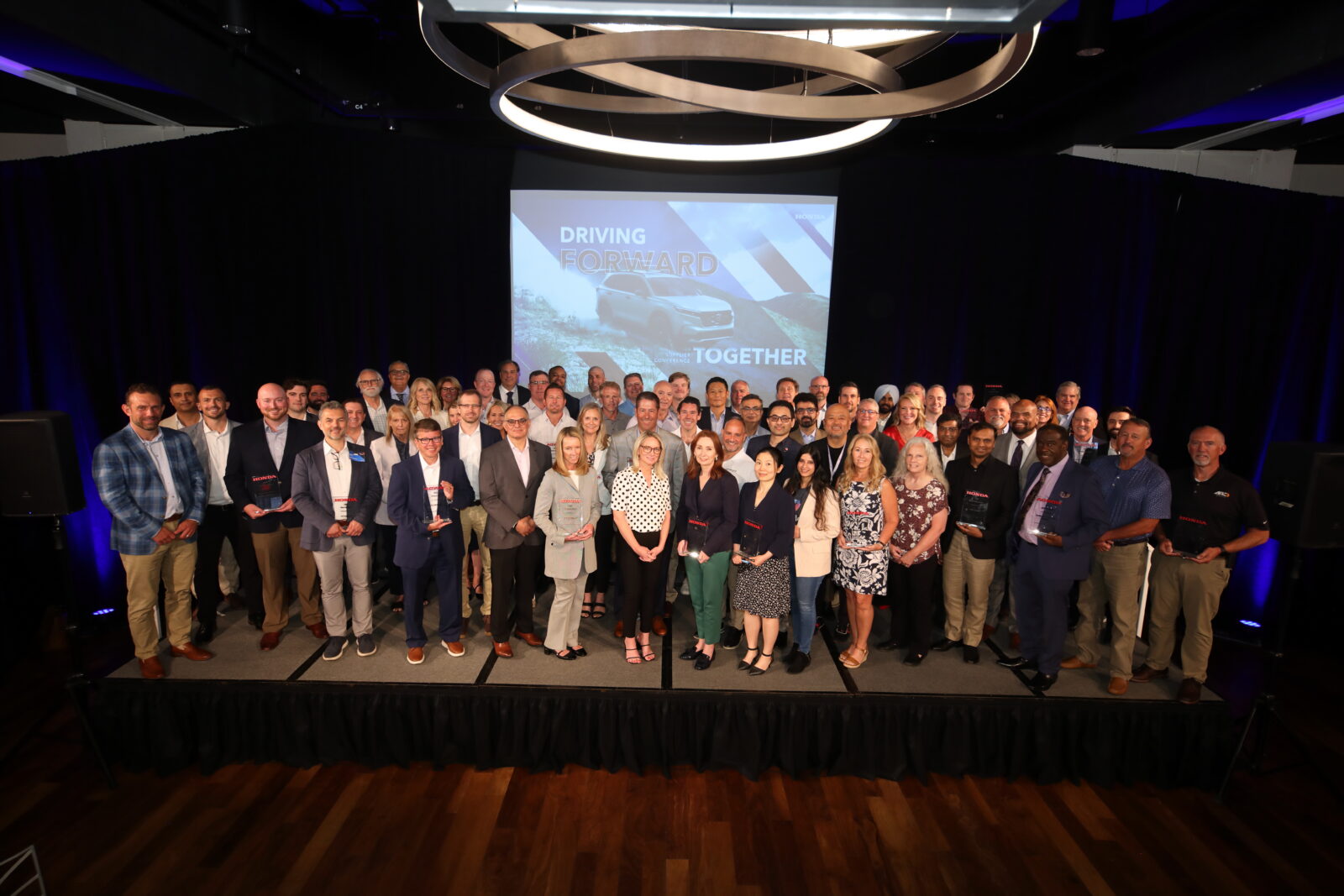
Representative company staff accepting their awards from Honda.
This year’s conference carried the theme “Driving Forward Together,” and if you ask the people who’ve spent the last nine years building Honda’s trade show presence at TPG, that phrase pretty much sums up the whole partnership.
So what did TPG actually do?
Sustainability awards can sometimes feel abstract, consisting of nice language about “green initiatives” without much behind it. That’s not the case here. TPG’s approach was concrete, operational, and baked into nearly every stage of how a Honda exhibit gets built, shipped, and reused:
- Repurposing existing exhibit assets instead of defaulting to new materials, cutting down on both raw material consumption and construction waste.
- Redesigning shipping crates for better space efficiency, which translates directly into less freight volume, lower transportation emissions, and reduced logistics costs.
- Extending the life of exhibit properties through proactive quality control, refurbishment, and maintenance, keeping assets in service longer rather than replacing them prematurely.
- Designing for modularity from the start, so components can be reconfigured and reused across future events instead of being built for a single show and then discarded.
Put simply: TPG didn’t bolt sustainability onto its process as an afterthought. It rebuilt the process around reuse, refurbishment, and smarter logistics, with the byproduct being fewer emissions and less waste at every step of an exhibit’s lifecycle.
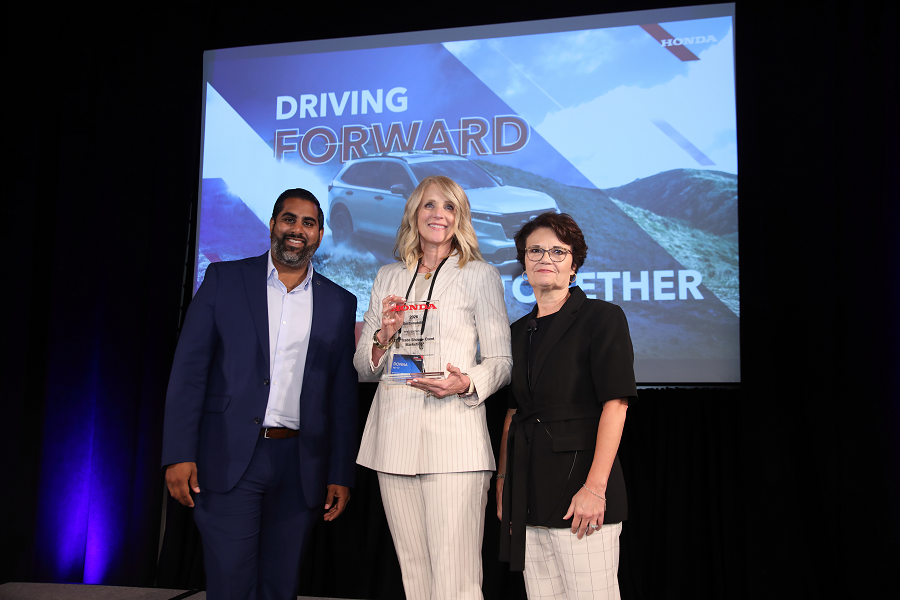
Controller Donna Pettit accepts the award on behalf of TPG.
Nine years of “let’s make this better”
What makes this particularly meaningful is the timeline. TPG and Honda’s Marine and PowerSports business units have been working together for nearly a decade, and the relationship clearly hasn’t gone stale. TPG’s team credits the Supplier Diversity team, Honda’s Procurement Team, and the client business units for nine years of collaboration focused on reducing costs and reusing materials across the trade show and event industry.
That’s the part worth sitting with. Sustainability gains like these don’t usually come from one big swing. They come from years of incremental “let’s optimize this crate,” “let’s refurbish this instead of replacing it” decisions that compound over time. Nine years of those decisions adds up to an award-winning program.
Why this matters beyond the trophy case
Trade shows and live events have a reputation for being wasteful: single-use builds, one-way freight, materials destined for a dumpster the day after the show floor closes. TPG’s recognition here is a useful counterexample. It shows that exhibit and event marketing can be designed for longevity and reuse without sacrificing the polish and brand experience clients expect.
Honda’s broader supplier program also recognized companies like Amazon Web Services and Microsoft in the same Sustainability category this year. This is good company to be in, and a sign that even massive global brands are prioritizing ESG performance (Environmental, Social and Governance) from their event and marketing partners, not just their manufacturing supply chain.
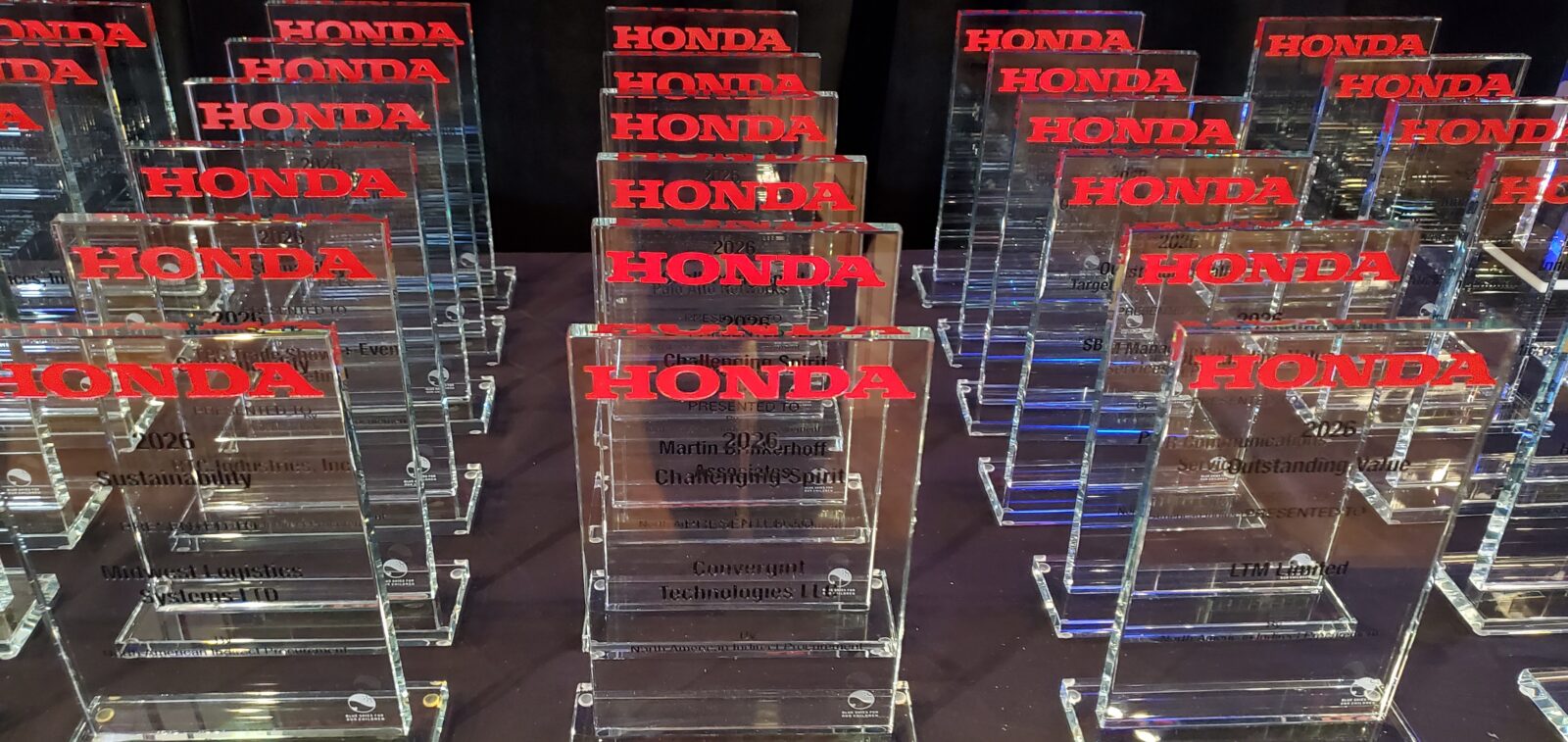
Congratulations, TPG
Awards are nice. What’s better is what they represent: a trade show partner that’s treating sustainability as a design principle rather than a marketing line, and a client relationship strong enough to last nine years and counting. Here’s to the next nine!

Reported by TPG’s C.C. Carr